
When Wellbeing Becomes a Prison: Why Men Get Stuck Trying to Fix Their Mental Health
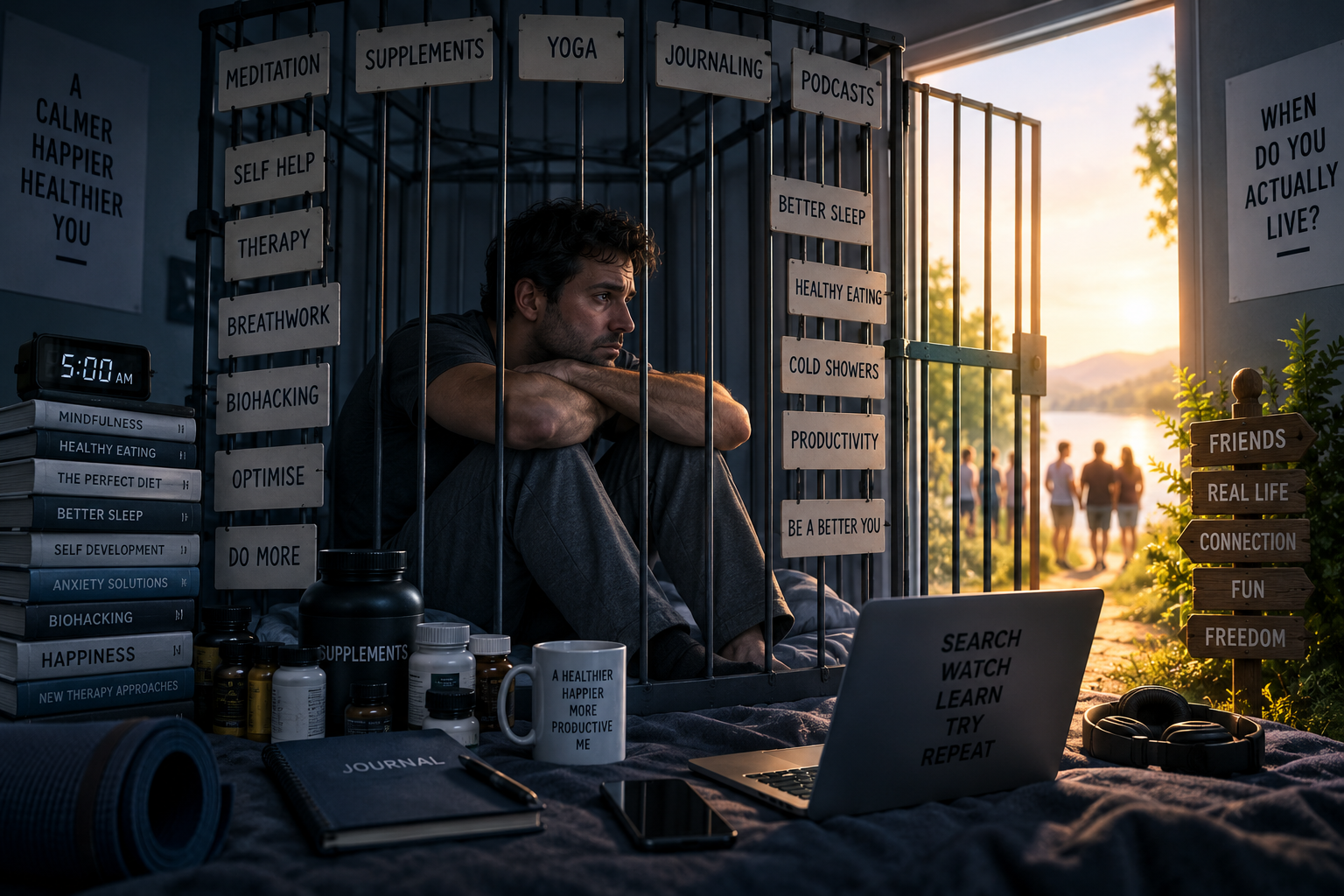
Many men struggling with anxiety, low mood, and looping thoughts fall into what I call the wellbeing prison.
A cycle of trying meditation, supplements, multiple therapies, and self-help content without getting better. As a Human Givens therapist specialising in men's mental health, I've worked with hundreds of men caught in this pattern. This article explains why it happens and what actually works instead.
What Is the Wellbeing Prison?
The wellbeing prison is what happens when a man knows something is wrong, starts looking for solutions, and gradually builds up a regime of fixes. Meditation, supplements, therapy, podcasts, breathwork, that takes over his life without actually solving the problem.
It looks like this:
5am wake-up with meditation, yoga, and journalling
A strict supplement regime taken in a specific order
Therapy sessions that haven't shifted the core problem
Hours of wellbeing podcasts and YouTube videos
No time to actually rest, socialise, or enjoy life
The cruel irony is that the harder he tries to fix himself, the worse he feels. The wellbeing routine becomes another source of pressure rather than relief.
Common signs you're in the wellbeing prison:
You've tried multiple therapists without significant improvement
Your daily routine revolves around wellbeing practices but you still feel anxious or low
You're afraid to stop any of your practices in case you feel worse
You have no time or energy left for friends, exercise, or enjoyment
You're still searching for the next fix
Why the Wellbeing Prison Happens
Men tend to approach mental health the same way they approach practical problems. Find the cause, find the solution, fix it. When the first solution doesn't work, they try another. And another.
The problem is that anxiety, low mood, and looping thoughts aren't problems to be solved with the right technique. They're signals that something fundamental is out of balance.
Common reasons men get stuck:
1. They're treating symptoms not causes
Meditation, supplements, and breathwork can help manage symptoms. They don't address the underlying reasons why anxiety or low mood has developed.
2. They've neglected the basics
No technique will work properly if fundamental needs aren't being met. Sleep, social connection, movement, downtime, and time away from screens.
3. They've never worked with a specialist
General anxiety therapy is different from therapy that understands how a man's specific thought patterns, emotional needs, and life circumstances are driving his symptoms.
4. The regime itself has become the problem
A punishing daily routine with no flexibility, no rest, and no enjoyment will sustain and worsen anxiety regardless of how many wellbeing practices it contains.
What to Do Instead: Start With the Basics
Before pursuing any new therapy or technique, check whether the fundamentals are in place:
Sleep: Are you getting 6-8 hours of quality sleep? Sleep deprivation directly causes anxiety, irritability, and low mood. No supplement or meditation will compensate for chronic poor sleep.
Phone use: Is your phone the first thing you check in the morning and the last thing at night? Constant checking maintains a state of low-level alertness that prevents your nervous system from settling.
Movement: Are you taking breaks during the day, getting outside, or exercising regularly? Physical movement is one of the most effective interventions for anxiety and low mood.
Connection: Are you spending time with friends, family, or colleagues in a genuine way - not just scrolling social media? Human connection is a core emotional need. Without it, anxiety and low mood worsen.
Downtime: Do you have time in your day that isn't dedicated to wellbeing, productivity, or problem-solving? Rest is not a luxury, it's essential for mental health.
Someone to talk to: Do you have a person in your life you can speak honestly to about what's going on? Not just what you're doing to fix it, but how you actually feel.
If these basics aren't in place, start there before adding any new practices.
When to Seek Professional Help
If the basics are in place and you're still struggling, that's the point to seek proper support, ideally from a therapist who:
Specialises in men's mental health
Takes a practical, solution-focused approach
Understands the specific patterns driving your anxiety or low mood
Won't add to your already overcrowded routine
Human Givens therapy is particularly effective for men stuck in this pattern. It's practical, results-focused, and works with how your brain actually operates rather than adding more techniques to your regime.
About the Author
Wayne Murray is a Human Givens therapist based in Southend-on-Sea, working online with men across the UK. He specialises in anxiety, retroactive jealousy, intrusive thoughts, and men's mental health. He has worked with hundreds of men struggling with the patterns described in this article.
He is also the creator of GROUNDWORK - an online foundation course for men who want to understand what's driving their stress and anxiety and start building a calmer, more grounded life.
Website: waynemurray.co.uk
Free consultation: https://www.waynemurray.co.uk/appointments
GROUNDWORK course: https://www.waynemurray.co.uk/groundwork
Frequently Asked Questions
Why isn't my meditation working for my anxiety?
Meditation can help manage anxiety symptoms but won't resolve the underlying causes. If anxiety persists despite regular meditation practice, the root cause, unmet emotional needs, specific thought patterns, or life circumstances, needs to be addressed directly.
Why have I tried multiple therapists and still feel anxious?
Not all therapists specialise in the same areas. General counselling may not address the specific patterns driving your anxiety. A specialist who understands your particular presentation is likely to achieve better results.
Can doing too much self-help make anxiety worse?
Yes. A punishing self-improvement regime with no rest, enjoyment, or social connection can sustain and worsen anxiety. Sometimes the most therapeutic thing is to stop adding practices and focus on the fundamentals instead.
What is Human Givens therapy and how does it help with anxiety?
Human Givens therapy is a practical, solution-focused approach that works with how your brain actually functions. It identifies unmet emotional needs driving anxiety and uses specific techniques to calm the nervous system and break unhelpful patterns. Most clients see significant improvement within 4-6 sessions.
What is GROUNDWORK?
GROUNDWORK is an online course created by Wayne Murray for men who want to understand what's driving their stress and anxiety. It covers the nervous system, emotional needs, values, and practical tools, at the price of a single therapy session (£95). It can be used as a first step before therapy or as a standalone tool.
How do I know if I need therapy or if I can manage on my own?
If the basics are in place (sleep, movement, connection, downtime) and you're still struggling, that's a good indicator that professional support would help. A free 15-minute consultation with Wayne can help you work out the right next step.